
Rasul EPS Panels Saudi Arabia are becoming an important construction solution for modern wellness facilities, spas, hotels, resorts, and luxury residential projects. Rasul rooms require a carefully designed environment where heat, steam, moisture, waterproofing, insulation, and interior finishes work together.
Unlike a conventional bathroom, a Rasul room is designed around a controlled wellness experience. The room may include heated surfaces, steam, seating, treatment areas, tiled walls, niches, curved features, and specialized drainage. Because of these requirements, the underlying construction system needs to accommodate both technical performance and creative design.
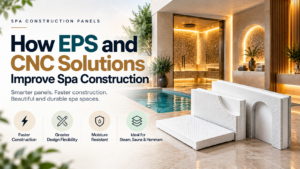
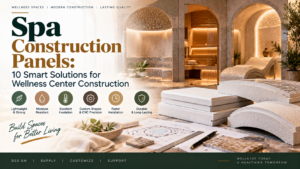
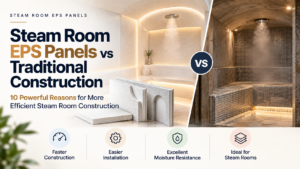
EPS, or Expanded Polystyrene, can be shaped into lightweight construction panels and custom components. With CNC cutting, manufacturers can produce accurately shaped elements for walls, benches, ceilings, niches, curves, and other architectural features.
However, choosing the right panel is only one part of successful Rasul room construction. The complete system should consider substrate preparation, waterproofing, thermal insulation, reinforcement, adhesive compatibility, tile or stone finishes, drainage, ventilation, heating, and local building requirements.
This guide explains how Rasul EPS Panels Saudi Arabia can be used, what to consider when selecting them, and how they fit into modern Rasul room construction.
A Rasul room is a specialized wellness treatment space designed around heat, steam, humidity, and body treatments. Rasul treatments are commonly associated with spa and wellness facilities and may involve mineral-rich mud or other treatment products applied to the body while the room is heated and humidified.
The exact design of a Rasul room can vary considerably.
A project may include:
Because these rooms regularly experience moisture and elevated temperatures, ordinary room construction methods may not provide the design flexibility or installation efficiency required for every project.
This is where specialized Rasul room construction panels can become useful.
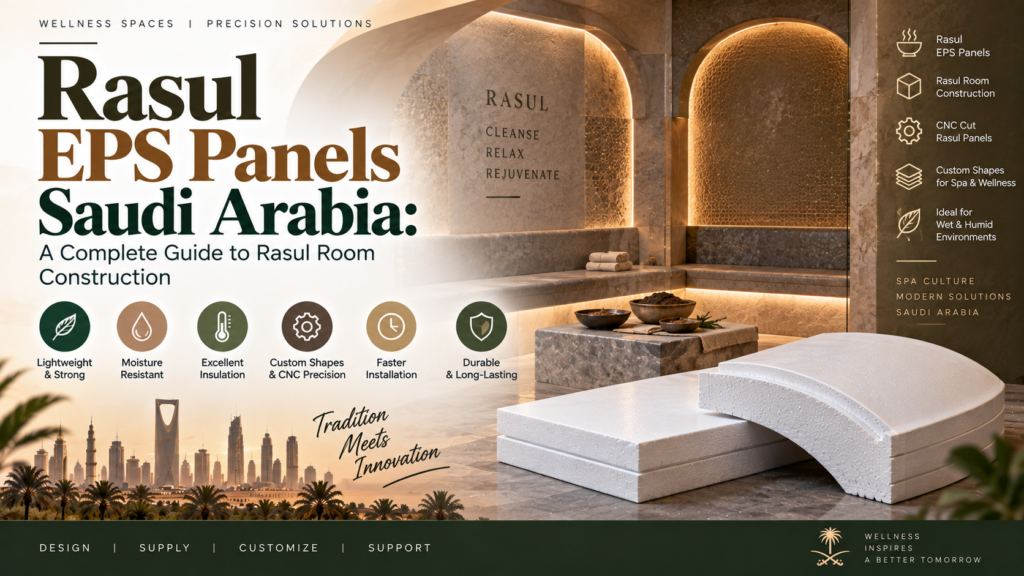
Rasul EPS Panels Saudi Arabia are construction components manufactured from Expanded Polystyrene (EPS) and designed or adapted for use in Rasul and other wellness-room applications.
EPS is a lightweight material with thermal insulation properties and dimensional stability. The EPS Industry Alliance describes EPS as offering properties including thermal resistance, compressive strength, dimensional stability, and water resistance.
For Rasul construction, EPS can be manufactured into panels or custom shapes instead of using only flat sheets.
With CNC technology, a digital design can be converted into precisely cut components. This makes it possible to manufacture:
The finished EPS component is normally incorporated into a larger construction and finishing system. Waterproofing, reinforcement, adhesives, surface coatings, and final finishes must be selected according to the project’s technical requirements.
Rasul rooms often contain shapes that are difficult to create efficiently with conventional masonry.
For example, a designer may want a curved heated bench running along one wall, a rounded ceiling transition, or a recessed treatment niche.
Building these shapes traditionally can require multiple materials, extensive cutting, additional labor, and considerable finishing work.
CNC-manufactured EPS components can simplify the process by producing the required shape before installation.
ThermaCraft Wellness, for example, describes its EPS thermal cabins as precision-engineered using CNC technology and notes that project-specific production drawings can be prepared for customized EPS panels.
This approach can be particularly useful when a Rasul room has a detailed architectural design.
One of the main advantages of EPS is its low weight.
Compared with many conventional construction materials, EPS components can be easier to transport, position, cut, and install.
This can be useful when constructing:
The reduced weight can also make handling individual components easier during installation.
Temperature control is an important consideration in a Rasul room.
The room needs to maintain a controlled environment while the heating and steam systems operate. Proper insulation can help reduce unwanted heat transfer through the room envelope.
EPS is widely used as a thermal insulation material. Its thermal performance depends on density, thickness, product specification, installation, and the overall wall or ceiling assembly.
The Saudi Building Code includes energy-conservation and thermal-insulation requirements, including provisions concerning the building envelope.
For a Rasul project in Saudi Arabia, the insulation system should therefore be selected and detailed according to the applicable project requirements rather than simply choosing a panel based on thickness.
Modern Rasul rooms are rarely limited to simple rectangular walls.
Designers may specify:
Rasul CNC panels can be manufactured according to digital drawings, allowing complicated shapes to be produced with consistent dimensions.
This is especially useful for projects where multiple identical components are required.
Traditional construction of a curved bench or complex architectural feature can involve several stages.
A CNC-cut EPS component can arrive at the project site already shaped according to the approved design.
This can reduce the amount of manual shaping required on site.
However, actual installation time depends on:
Therefore, EPS should be viewed as a construction system that can improve workflow rather than as a guarantee of a specific installation time.
One of the strongest reasons to consider Custom Rasul room panels is design flexibility.
A wellness designer can create a room around the available space instead of being restricted to standard panel dimensions.
For example, custom EPS components can be designed around:
This makes EPS particularly suitable for luxury spas and hotel projects where every Rasul room may have a different architectural concept.
Rasul rooms often use decorative architecture to create a premium atmosphere.
EPS can be CNC-cut into different profiles and shapes, which can help create features such as curved seating, arches, domes, and decorative transitions.
The advantage is not simply visual.
Accurately manufactured components can also make it easier for installers to reproduce the intended design.
For projects using multiple rooms, consistent CNC manufacturing can help maintain similar dimensions and design details across each room.
Large quantities of conventional construction materials can be difficult to move and modify on a busy project site.
EPS components are relatively lightweight, which can make transportation and handling more convenient.
The material is also easy to shape using appropriate cutting and manufacturing methods.
The EPS Industry Alliance identifies EPS as a lightweight material with applications across building and construction.
For large hotel or spa developments, these handling characteristics can be useful during the construction phase.
Successful Rasul room construction requires more than installing EPS panels.
A typical project can involve several stages.
The available space is measured and existing conditions are reviewed.
The construction team should identify:
The Rasul room is then developed according to the required layout.
The design may include:
Detailed drawings are prepared before manufacturing.
This is particularly important when using CNC-cut components because the final dimensions need to correspond with the approved design.
EPS blocks or panels are cut according to the production drawings.
This creates the individual components required for the room.
The components are assembled and secured according to the specified construction system.
Depending on the system, the EPS construction may receive reinforcement and suitable surface layers before the final finish.
A suitable waterproofing system is applied to areas exposed to water and steam.
Tiles, stone, mosaics, or another approved finish can then be installed according to the project specification.
Rasul CNC panels are particularly valuable when a project contains complex shapes.
Instead of manually cutting every component at the construction site, CNC machinery follows a digital design.
This allows manufacturers to produce repeatable shapes with accurate dimensions.
For example, a curved bench can be divided into several CNC-cut components that are designed to fit together during installation.
The same principle can be used for:
CNC manufacturing does not replace proper engineering or installation. It provides a more controlled way of producing the physical components required by the design.
Every wellness project has different requirements.
A small residential Rasul room may require a simple layout, while a five-star hotel may require a highly customized interior.
Custom Rasul room panels can be designed around the project’s exact dimensions.
Customization may include:
EPS can be shaped into straight, curved, or angled bench structures.
Recessed areas can be incorporated into walls for storage or decorative purposes.
Curved geometry can create a softer architectural appearance while reducing the need for extensive manual shaping.
Arches, profiles, transitions, and other architectural details can be manufactured according to the design.
Some projects may require curved or domed ceiling elements rather than a conventional flat ceiling.
This is one of the most important parts of Rasul room construction.
EPS itself should not be treated as a complete waterproofing system.
A Rasul room requires an appropriate waterproofing and finishing assembly designed for the expected exposure to water, steam, condensation, and cleaning.
The construction should address:
Waterproofing details should be compatible with the substrate, adhesive, reinforcement, and final finish.
A poorly detailed joint can become a moisture problem even when the main panel material is suitable.
Rasul rooms require controlled temperatures, so thermal insulation is an important part of the design.
The objective is to create a room assembly that limits unwanted heat transfer while working with the heating and steam systems.
The required insulation level should be determined from the project design, local requirements, room conditions, and selected construction assembly.
Saudi building regulations include requirements relating to thermal insulation and energy conservation. The Saudi Building Code’s documentation identifies SBC 601 and SBC 602 as energy-conservation codes, while the current general code also contains provisions relating to foam plastic insulation.
This means panel selection should not be based solely on marketing specifications.
The complete assembly should be reviewed by the relevant project professionals.
Before selecting EPS panels for Rasul rooms, consider the following factors.
Different EPS products can have different densities and mechanical properties.
The appropriate specification depends on the intended application.
Thickness influences thermal performance and available construction dimensions.
It should be selected based on the required assembly rather than simply choosing the thickest available panel.
For custom Rasul rooms, manufacturing accuracy matters.
Ask the supplier about:
Find out which reinforcement, coating, waterproofing, adhesive, and finishing systems are compatible with the EPS product.
Foam-plastic materials have specific fire-related considerations. The applicable Saudi Building Code provisions and project specifications should be reviewed by qualified professionals. The Saudi General Building Code includes dedicated provisions concerning foam plastic insulation.
A supplier experienced in wellness construction can understand the special requirements of steam rooms, hammams, Rasul rooms, and other wet thermal environments.
Construction in Saudi Arabia must follow the requirements applicable to the project, building type, location, and construction system.
The Saudi Building Code provides requirements covering areas such as building design, energy conservation, insulation, mechanical systems, and other construction considerations.
For this reason, an EPS panel should not be selected only because it is lightweight or easy to cut.
The project team should verify:
A qualified engineer or relevant project professional should confirm the suitability of the complete assembly for the intended application.
EPS is only one part of the construction assembly.
It needs an appropriate surface and waterproofing system for the intended application.
Joints between components need proper treatment.
Poorly detailed joints can create weak points in the finished construction.
Steam pipes, drains, electrical connections, lighting, and water supply should be considered before manufacturing the panels.
The cheapest panel may not provide the required density, thickness, dimensional accuracy, or system compatibility.
Custom CNC fabrication works best when the design is properly documented before production begins.
For your website, add an internal link from this article to your Rasul Rooms, EPS Thermal Cabin, CNC EPS Cutting, or Wellness Construction service page.
Suggested anchor text:custom Rasul room construction solution Example paragraph:For projects requiring a complete wellness construction solution, professional custom Rasul room construction solutions can combine CNC-cut EPS panels, thermal insulation, waterproofing systems, custom seating, and specialized interior finishes. This approach helps ensure that the individual components work together as one coordinated Rasul room system.
You can insert your relevant ThermaCraft Wellness internal URL on the anchor text.
For technical and regulatory research, useful resources include the Saudi Building Code, which provides Saudi construction and energy-conservation requirements, and the EPS Industry Alliance, which provides technical information about EPS properties and building applications.
When adding these to WordPress, use standard external links where appropriate rather than manually adding nofollow unless there is a specific SEO or editorial reason to do so.
Rasul EPS Panels Saudi Arabia can provide a practical foundation for creating customized wellness spaces when they are selected and installed as part of a properly designed construction system.
Their lightweight nature, thermal insulation properties, CNC design flexibility, and ability to form complex shapes make EPS suitable for many Rasul room applications.
The biggest advantage is the ability to move beyond simple rectangular construction. With Rasul CNC panels and custom Rasul room panels, designers can create curved benches, niches, arches, ceiling features, and other architectural elements while maintaining accurate dimensions.
However, successful Rasul construction depends on more than the EPS itself. Waterproofing, reinforcement, surface finishing, thermal performance, fire requirements, drainage, ventilation, heating, and applicable Saudi regulations all need to be considered.
For hotels, spas, resorts, wellness centres, and luxury residential projects, properly engineered Rasul room construction panels can help turn a detailed design into a practical, finished wellness environment.
Rasul EPS panels are Expanded Polystyrene-based construction components used to create insulated and customized structures for Rasul and other wellness rooms. They can be manufactured as flat panels or CNC-cut into specialized shapes.
EPS can provide thermal insulation, low weight, and design flexibility. CNC manufacturing also allows components to be produced for curved benches, niches, arches, ceilings, and other customized features.
Rasul CNC panels are EPS components shaped using computer-controlled cutting equipment according to digital production drawings. They are useful for creating accurate and complex Rasul room components.
EPS has water-resistant properties, but an EPS panel should not automatically be considered a complete waterproofing system. Rasul rooms require an appropriate waterproofing and surface-finishing assembly.
Yes. Custom Rasul room panels can be manufactured according to project-specific dimensions and designs, including curved walls, benches, niches, arches, and other architectural features.
EPS is used in building and construction applications, but suitability for a particular Rasul room depends on the complete construction system and applicable Saudi requirements. Thermal, fire, structural, waterproofing, and installation requirements should be verified for the specific project.
Consider EPS density, thickness, thermal performance, CNC accuracy, surface treatment, waterproofing compatibility, fire requirements, installation method, and the supplier’s experience with wellness construction.
For a successful Rasul project, choosing the right construction materials is only one part of the process. Proper insulation, moisture protection, customized room structures, and precision-cut components all play an important role in creating a durable wellness space. ThermaCraft Wellness provides specialized solutions for Rasul room construction, including customized EPS structures and CNC-cut components designed for modern spa and wellness facilities. You can explore our Rasul room solutions to learn more about the materials and construction options available for your project.